Role: Sensory & Quality Specialist (Area D)
Programme: EBRD Small Business Impact Fund
I was appointed as the Area D specialist, responsible for designing and embedding the sensory and quality layer that makes fermentation innovation commercially viable.
What I built
I created and implemented a complete sensory infrastructure for yeast extracts and reaction flavours, turning subjective tasting into a measurable, reproducible, and decision-ready system.
This included:
1. A production-ready sensory QA method
I designed a fast, reliable sensory evaluation protocol specifically adapted to yeast extracts.
It was tested, refined, and integrated into Enzym’s batch comparison and quality control workflows, enabling objective tracking of flavour drift, off-notes, and product consistency.
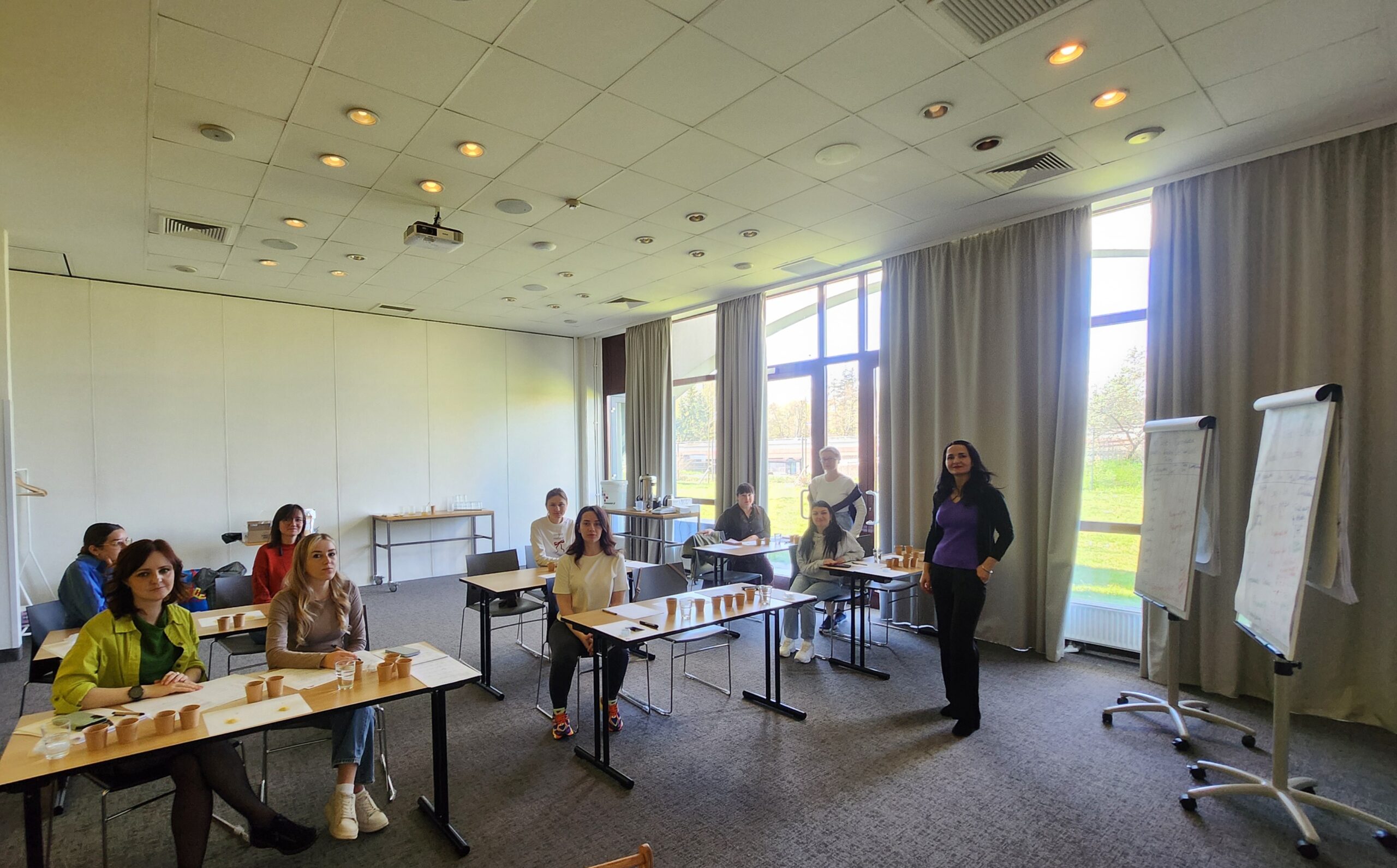
2. A trained, calibrated sensory panel
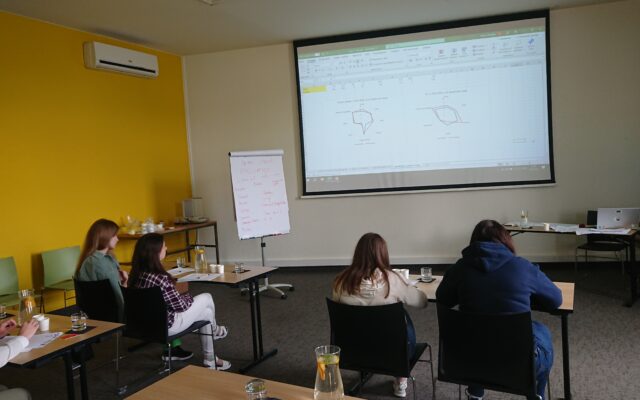
I delivered an intensive multi-day training programme for Enzym’s sensory team covering:
-
Comparative batch tasting
-
Off-note detection (rancid, smoky, acidic, burnt, fruity, resiny, etc.)
-
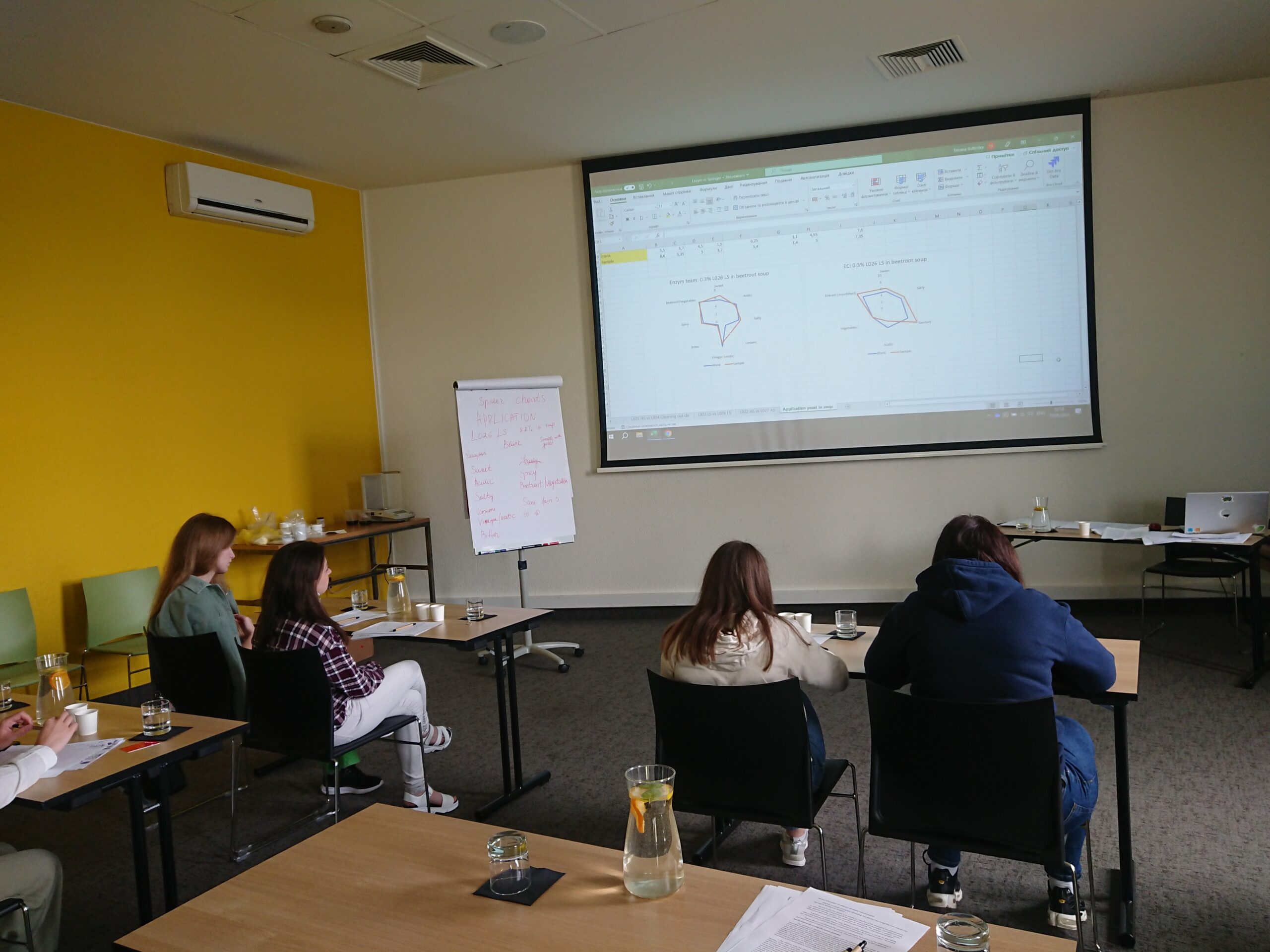
Sensory mapping and flavour profiling
-
Application testing in natural reaction flavours
By the end of the programme, Enzym had an internal panel capable of reliable discrimination and meaningful flavour description, documented in a formal technical report.
3. A proprietary yeast-specific sensory lexicon
I developed a bespoke sensory language for yeast extracts, mapping descriptors to reference compounds and production realities.
This lexicon became the foundation of Enzym’s standardised sensory framework for R&D, QA, and customer communication.
4. Statistical control of human perception
To eliminate panel noise and bias, I introduced statistical performance monitoring using:
This turned tasting from opinion into controlled measurement, allowing Enzym to scale sensory decisions with confidence.
Commercial impact
By the end of the project, Enzym had:
-
A fully operational sensory QA system
-
A trained and statistically monitored sensory panel
-
A formalised yeast-extract sensory language
-
Documented sensory records supporting product development and batch control
These systems directly supported the creation of a new portfolio of yeast-based reaction flavours (including roast beef, bacon, pork, and chicken profiles) with multiple products reaching commercial-grade sensory scores.
Why this matters
Fermentation companies fail not because they cannot make yeast — but because they cannot control flavour and consistency at scale.
This project turned Enzym’s sensory capability into a strategic asset, enabling:
-
Faster R&D cycles
-
Stronger QA and customer trust
-
Export-ready product positioning
-
Higher-value flavour and extract innovation
It is exactly the kind of invisible infrastructure that separates commodity producers from global ingredient brands.