

Non-alcoholic wines are still a novelty in Moldova. Many consumers don’t even know they exist. But this emerging category might appeal not just to wine lovers who can’t consume alcohol—such as pregnant women—but also to those who appreciate wine for its flavour, aroma, and ritual, rather than its buzz.
One reason to take this niche seriously? Gen Z is drinking less—and drinking smarter. Globally, this generation is redefining the role of alcohol in social life. Health-conscious, socially aware, and more inclined toward mental clarity and control, young adults are choosing non-alcoholic alternatives at bars, dinners, and even celebrations. Non-alcoholic spirits, beers, and wines are booming in markets from London to Seoul. Moldova, with its wine tradition, has a chance to get ahead of this curve—before international brands fill the gap.
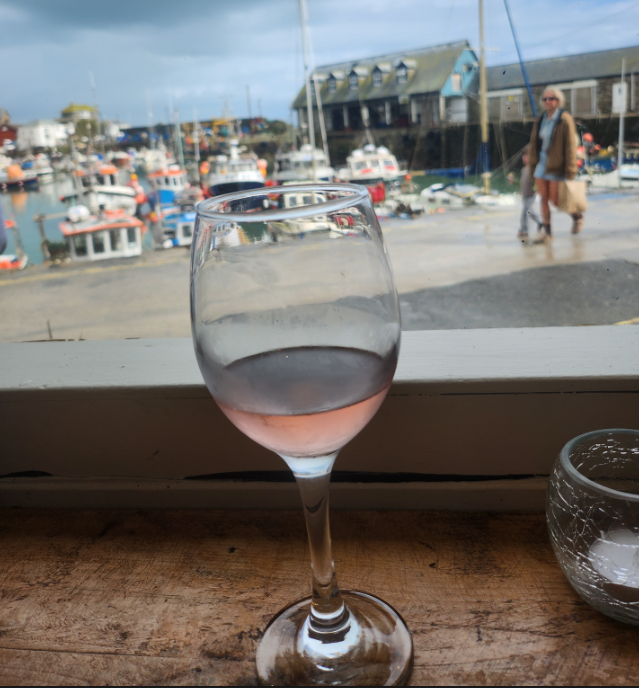
Yes, a high-quality dealcoholized wine tends to cost more. That’s because dealcoholization is a complex, additional step in the winemaking process. But with rising global interest in health-conscious alternatives, this could be a niche worth exploring—even in a country like ours, where wine is culture, identity, and sometimes religion.
How is the Alcohol Removed?
There are two main commercial methods to remove alcohol from wine: thermal distillation and filtration (reverse osmosis).
1. Thermal Methods: Distillation, Evaporation, Rectification
The simplest way to remove alcohol is by heating the wine until the alcohol evaporates. Because ethanol is more volatile than water, it boils off first. The problem? Heat is a brute force tool. It tends to destroy delicate aromas—especially floral ones—and can cause oxidation or even caramelization.
High-end producers avoid this by using vacuum distillation, where the boiling point is lowered by creating a vacuum. Under deep vacuum conditions, alcohol can be removed at just ~20°C, preserving more of the wine’s character. Think sous-vide, but for wine. In fact, some of this equipment is now accessible to hobbyists thanks to the sous-vide boom.
Still, even under vacuum, some flavour is lost. Aromatic complexity is reduced. And that’s a hard tradeoff for anyone who truly cares about wine as an experience, not just a beverage.
2. Filtration: Reverse Osmosis and Membrane Technology
The second method is reverse osmosis, a filtration process that uses extremely fine membranes to separate alcohol and water from the wine. The remaining concentrate—rich in flavour compounds and structure—is then rehydrated with water.
This method tends to preserve more aromas and is less harsh than heat. However, it still removes important structural components, like tannins, which are critical for mouthfeel and balance. So even though the resulting product may resemble wine chemically, it often feels thin or flat on the palate.
Reverse osmosis is also expensive. It usually takes two to four passes to fully remove alcohol, which is energy- and time-intensive. Still, its popularity is growing.
Hybrid and Experimental Approaches
Several other methods are under development or described in patents:
• Pervaporation, a membrane technique that operates at low temperatures, shows promise for preserving sensory quality.
• Spray-drying and sublimation (freeze-drying) could be used to create wine concentrates that are later rehydrated.
• Some producers experiment with removing alcohol and then blending back in carefully selected aromatic compounds or using botanical distillates.
(I have tried these methods in practice and know that they work).
However, legislation around wine composition is notoriously strict. In some regions, the addition of anything that alters the “natural” composition of wine is tightly regulated. There’s a political angle here too: traditional wine lobbies are pushing back against innovation, especially in markets dominated by “Old World” producers.
Can We Have It All?
Removing alcohol also strips away some of the pleasure. That’s the hard truth. But all is not lost.
Producers can partially compensate:
• Serve the wine slightly warmer to encourage aroma release.
• Focus on richer, more concentrated flavour profiles.
• Explore substitutes for alcohol’s mouthfeel (like glycerol or other volatiles—where permitted).
Let’s also keep perspective. The first alcohol-free beers were barely drinkable. Today, some are genuinely good. Quality improves fast when people start to care.
Why Should Moldovan Winemakers Care?
In a country where wine is both heritage and habit, and where alcohol-related health concerns are real, dealcoholized wine could be a small but meaningful step forward. It’s a way to reconcile public health goals with cultural values. As we say—maybe we really can save both the cabbage and the goat.
Yes, the sensory quality of most non-alcoholic wines today still leaves much to be desired. But that’s exactly why innovation is needed. Moldova has the grapes, the talent, and increasingly, the technology. What we lack is only a shift in mindset.
Dealcoholized wines are not just a curiosity. They could be an opportunity. And perhaps, one day, something we’ll be proud to pour. Hai, noroc!
Elena Cristea, 19th of July 2025
References:
1. The Academic Wino Blog
How Is Non-Alcoholic Wine Made? Osmotic Distillation and Other Methods
http://www.academicwino.com/2013/05/non-alcoholic-wine-osmotic-distillation.html
2. ScienceDirect – Osmotic Distillation
Topics in Agricultural and Biological Sciences: Dealcoholization
https://www.sciencedirect.com/topics/agricultural-and-biological-sciences/dealcoholization
3. ScienceDirect – Reverse Osmosis in Wine Dealcoholization
Sostar-Turk, S. et al. (2005). Use of pervaporation for dealcoholization of wine.
https://www.sciencedirect.com/science/article/abs/pii/S0260877405006448
4. ScienceDirect – Vacuum Distillation for Wine
https://www.sciencedirect.com/science/article/abs/pii/S0950329315300082
5. US Patent – Method for the Preparation of Alcohol-Free Wine
US Patent 4626437A
https://patents.google.com/patent/US4626437A/en
________________________________________
6. Anova Culinary – Sous Vide Precision Cooker
https://anovaculinary.com/anova-precision-cooker
________________________________________
7. BBC Good Food
Best Non-Alcoholic Drinks for 2018 and 2020
https://www.bbcgoodfood.com/review/best-non-alcoholic-drinks-2018
________________________________________
8. E.C. Kraus Wine Blog
How Do You Make Non-Alcoholic Wine?
https://blog.eckraus.com/how-do-you-make-non-alcoholic-wine