

From terraced vineyards to permacultures to perfectly imperfect natural colourants
There is a quiet (r)evolution waiting to happen in food science. Not a (r)evolution of louder claims, shinier technologies, or thicker regulatory folders, but a biological one.
I started admiring permacultures since I was a child.
As children, we would always get our cherries from a terraced vineyard turned forest. The villagers had once planted cherry trees among the vines. Years later, when erosion began threatening the terraces and the vineyards were gradually abandoned, the land was allowed to return to forest. The cherry trees survived. They adapted. They became part of a new ecosystem. No one called it permaculture and no one wrote a design manual. However, it was exactly that: intelligent adaptation to soil, slope, erosion, and time. The terraces stopped collapsing, the forest stabilised the soil, the cherries kept fruiting, and nature reorganised itself.
That landscape shaped my scientific thinking and imagination long before I entered a laboratory.
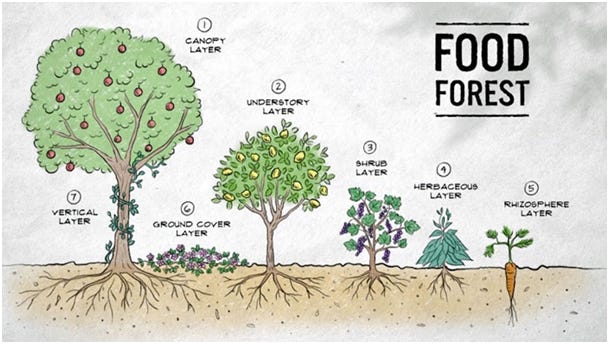
Permaculture is often treated as an aesthetic lifestyle choice, sometimes romantic, sometimes impractical, sometimes delusional. But from a systems perspective, it is neither. It is thermodynamically intelligent, ethically serious and a possible way forward.
In the modern conventional industrial food systems, we attempt to suppress variability. We aim for monoculture, uniform ripening curves, identical morphology, predictable behaviour in processing and we design fields like factories.
Permaculture does the opposite. It designs fields like natural, random ecosystems. In such ecosystems, diversity is not inefficiency, but resilience. Irregularity is not failure, but adaptation. Complexity is not noise, but information.
As a food scientist working at the interface of chemistry, flavour, and consumer perception, I see something critical: our technological systems are still optimised for uniform raw materials. However, biological and biotechnological systems never behave uniformly. Climate variability alone makes the pursuit of standardised perfection increasingly artificial and increasingly expensive.
The way forward is not tighter control, but a better translation between nature and technology.
The wonky and imperfect fruit and vegetables trend launched by several supermarkets is a good start.
The fact that we classify perfectly edible produce as “imperfect” reveals more about our psychology than about the food itself. A bent carrot contains no less sucrose. A freckled apple is not necessarily chemically or nutritionally inferior.
In the last century or so, we have conflated visual conformity with quality.
From a sensory science perspective, this is a fascinating distortion. Consumer preference is highly plastic. Visual cues prime expectations but expectations can be retrained. Markets are not static, they are continuously educated.
If we allow morphological diversity back into supply chains, several things happen simultaneously:
· Food waste will decrease.
· Agricultural resilience will increase.
· Processing flexibility becomes a competitive advantage.
· Sensory evaluation becomes more important, not less.
Because when shape is no longer the main quality parameter, flavour, taste and texture regain authority.
Chill a Little Bit with Standardisation
Standardisation was historically necessary.
It allowed scaling. It enabled safety by preventing contamination disasters. It reduced adulteration. It made international trade possible. However now we have drifted from functional standardisation into pure aesthetic optimisation. In many sectors, specifications now constrain not safety or functionality, but visual uniformity and statistical neatness, which are both expensive habits.
Over-standardisation reduces adaptive capacity, it narrows genetic diversity, it increases rejection rates and it pushes variability upstream, where farmers and processors absorb the cost.
As scientists and technologists, we should ask an uncomfortable question:
Are our specifications protecting consumers or protecting our own discomfort with variability? Because there is a difference.
The Rising Role of the Sensory Scientist
If raw materials become more diverse, the role of the sensory scientist becomes central. The sensory analyst is not a peripheral quality control function. She or he is a translator between organoleptic variability and technological decision-making.
They quantify perception, they decode hedonic preferences, and they separate true defects from mere unfamiliarity.
If and when food systems become more ecologically aligned, variability will increase in colour, shape, volatile profiles, texture, taste, etc. Someone must determine whether that variability is meaningful, acceptable, or even desirable.
That someone is not a bureaucrat.
It is the sensory scientist who will
1) Characterise natural variability
2) Model stability under process stress
3) Define sensory tolerance
4) Integrate into specification windows
In the coming decade, I anticipate a shift: sensory science will move upstream into agricultural strategy and downstream into product positioning. It will no longer be confined to end-point validation, but it will guide design. This is already happening and has been standard operating procedure since forever in certain fields, e.g. winemaking.
Because when nature is allowed to express itself, interpretation becomes a competitive asset.
Hawthorn: a case study of an underused raw material
Take Crataegus monogyna, i.e. hawthorn.
A small, rounded deciduous tree with glossy, deeply lobed leaves and flat sprays of cream flowers, usually followed by dark red berries in autumn (Royal Horticultural Society, 2021). But their colour can differ significantly depending on variety, microclimate, and growing conditions. Already, variability.
The berries can be used for juice fabrication, providing a refreshing, sour, tangy beverage rich in vitamins and antioxidants. Importantly, bioactive compounds persist even in processing residues and represent an overlooked opportunity for valorisation.
Scientifically, hawthorn is far from trivial:
- It exhibits vasorelaxant effects and inhibits endothelin-1 (Bahorun, Trotin, & Vasseur, 1994).
- It demonstrates antiproliferative effects on human tumour cells (Rodrigues et al., 2012; Li et al., 2020).
- It possesses strong antioxidant properties.
- Its extracts show protective abilities relevant to cosmetic and sunscreen formulations (Jarzycka et al., 2013).
Yet most discussions remain confined to pharmacology and cosmetics.
As a food scientist, I saw something else: pigment and potential antioxidant. Hawthorn pigments derive primarily from polyphenolic compounds and carotenoids, both exhibiting antioxidant activity (Perez-Galvez, Viera, & M., 2020). Flavonoids and procyanidins are considered the main active constituents, and in many pharmacopoeias these groups are used to standardize and control hawthorn preparations (Wu et al., 2020).
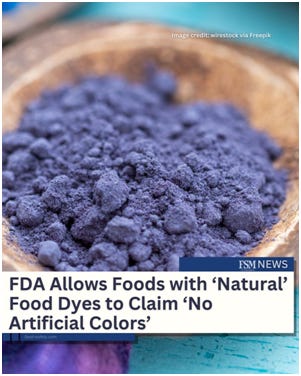
Recent reports show that natural colours are accelerating in the shift toward natural ingredients and are becoming essential in functional food formulation (Kaderides, 2021). As of early 2026, the FDA is in the process of phasing out several synthetic petroleum-based dyes from the U.S. food supply following a 2025 announcement to eliminate them by the end of 2026. This initiative aims to remove common dyes like Red 40, Yellow 5 & 6, and Blue 1 & 2, while Red No. 3 was officially banned in food in Jan 2025.
The question is no longer whether natural pigments are desirable. The question is whether we are technically and commercially ready enough to use them.
Natural Does Not Mean Easy
Natural ingredients tend to exhibit lower stability compared to synthetic dyes, which are engineered to withstand harsh processing and thermal treatments.
Synthetic colourants are usually one stable and predictable compound. Hawthorn extracts like other botanical extracts are complex matrices, which respond to:
- pH
- Temperature
- Metal ions
- Storage time
- Light
Therefore, model studies are necessary. If we want to replace synthetic dyes, we must understand the behaviour of natural pigments under technological conditions.
In our recent research, we have investigated pigment stability across varying pH, temperature, and ionic conditions, and evaluated storage effects on antioxidant capacity and colour retention. The findings provided new insights into the technological feasibility of hawthorn pigments as natural food colourants and antioxidants. They also highlighted something crucial: variability in this specific case can be both a defect and a design parameter (Cristea et al., 2024).
Nature makes unique things
The terraces of my childhood did not collapse because villagers allowed the system to reorganise. The cherries survived because they were embedded in diversity. Hawthorn berries growing at forest edges are not engineered for uniform colour stability. They are biochemical responses to microclimate, soil, and stress.
Nature does not make perfect things, nature makes unique things.
And perhaps the future of food lies not in correcting nature while claiming it on the label but in learning how to listen to it. The way forward is not to correct nature into synthetic mimicry.
It is to understand it deeply enough from a chemical, sensory, and technological perspective. And then to integrate it into modern food systems without stripping away its complexity.
Accept permaculture and other novel agricultural techniques.
Accept aesthetically imperfect foods.
Reduce unnecessary bureaucratisation.
Empower sensory science to interpret variability.
Expand the use of botanical pigments, antioxidants, flavours, etc.
And perhaps, like those terraces, our food systems will stabilise not through rigidity, but through intelligent diversity. Most sustainability writing romanticises variability while most food technologists suppress it.
I am proposing to engineer with variability, not eliminate it. Variability must be treated as a design parameter, not a defect.
References
- Bardakci, H., Celep, E., Gozet, T., Kan, Y., & Kirmizibekmez, H. (2019). Antioxidant potential of different Turkish Crataegus taxa.
- Bahorun, T., Trotin, F., & Vasseur, J. (1994). Vasorelaxant and antioxidant effects of hawthorn extracts.
- Jarzycka, A., Lewinska, A., Gancarz, R., & Wilk, K. (2013). Protective effects of hawthorn extracts in cosmetic formulations.
- Kaderides, K. (2021). Natural colours in functional foods.
- Li, et al. (2020). Antitumor activity of hawthorn extracts.
- Pawlaczyk-Graja, I. (2018). Photostability and antioxidant activity of hawthorn compounds.
- Perez-Galvez, A., Viera, I., & M. (2020). Polyphenols and carotenoids as antioxidant pigments.
- Rodrigues, et al. (2012). Bioactive effects of hawthorn extracts.
- Shortle, E., Kerry, J., Furey, A., & Gilroy, D. (2013). Optimisation of extraction of bioactive compounds from hawthorn.
- Wu, J., Liu, Y., Xing, D., Li, H., & Cao, Y. (2020). Standardisation of hawthorn preparations.
- Krebs, J., & Bach, S. (2018). Permaculture—Scientific Evidence of Principles for the Agroecological Design of Farming Systems. Sustainability, 10, 3218.
- Cristea, E. et al. (2024). Stability and Antioxidant Properties of Crataegus monogyna Pigments. Horticulturae, 10(11), 1184. https://www.mdpi.com/2311-7524/10/11/1184