

Few words exert as much gravitational pull on consumers as natural. The term radiates implied health, safety, wholesomeness, even a faint moral superiority. It functions less as a descriptor and more as a halo. Yet despite its ubiquity, natural remains one of the most contested, inflated, and epistemologically fragile labels in the entire food industry. What does it actually mean? And who benefits from its ambiguity?
My relationship with the term began at the Ministry of Agriculture and Food Industry of Moldova. My very first task was to read and interpret the 2011 food law, a law which stated bluntly that the use of natural on foods was prohibited as it misled consumers. That clarity was refreshing. What happened in the years that followed, under the pressure to harmonise national legislation with the EU acquis, is a different story.
And here lies the deeper conflict: you cannot build an epistemologically sound definition from a logical fallacy, i.e. the appeal to nature. Yes, raw strawberries are “natural,” but so are snake venom, insect shells, hallucinogenic fungi, and earthworms. I have no interest in consuming any of them, perhaps with the occasional exception. Yet politicians have proved remarkably willing to take this intellectual debris and enshrine it in policy. Ambiguity makes wonderful technical barriers to trade.
Instead of saying “I don’t want to play with you anymore” like normal five-year-olds, policymakers construct elaborate obfuscations, hire experts to defend them, and then legislate accordingly. The result is an entire industry of technical directors, quality managers, and legal advisors who spend their days deciphering nonsense instead of doing work that actually matters. In the end the consumer pays for the privilege.
The fetish for “natural” is a cultural symptom – a collective yearning romanticised as “return to roots,” but in its unhealthy form, closer to “return to the cave”, a sort of New Age sentimentalism and worship of Mother Nature, divorced from scientific reality.
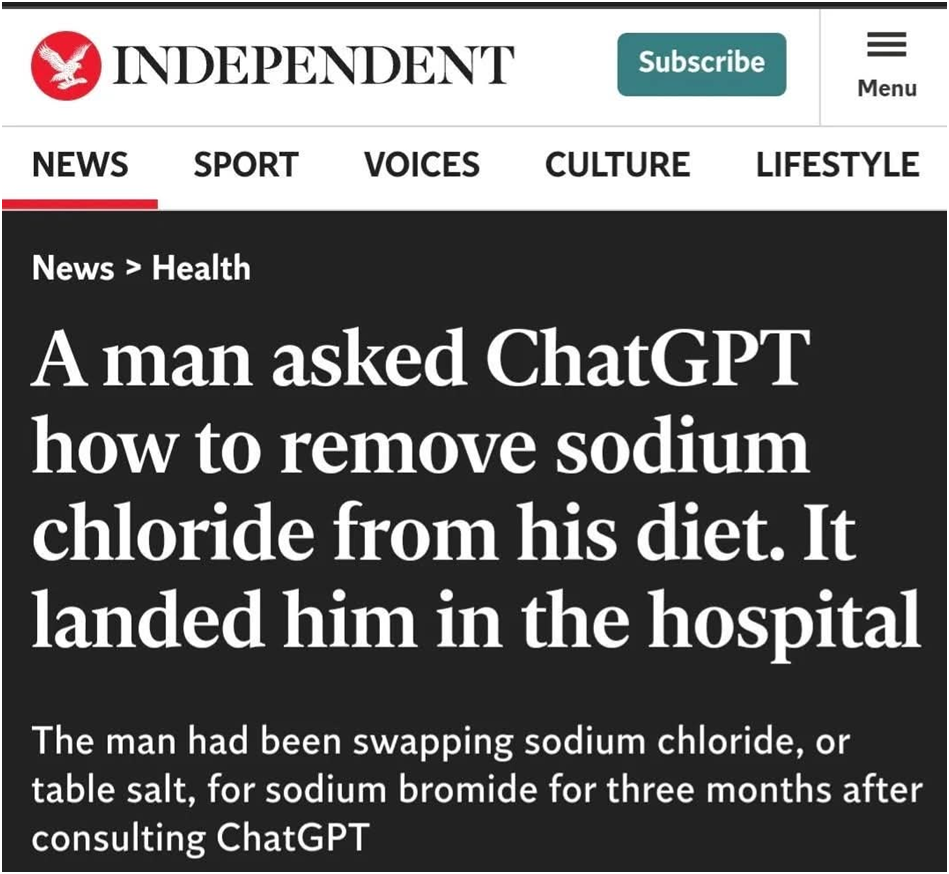
Legal Ambiguity: What does “natural” actually mean?
Despite its marketing power, the term natural has never achieved a globally coherent legal definition. This vagueness is precisely what allows the word to flourish.
United States
The FDA has no formal definition for “natural” in food labelling, merely noting it does not object to the term provided no artificial or synthetic ingredients “not normally expected” are present (FDA, 2016). The USDA applies a marginally stricter standard for meat and poultry: no artificial ingredients and only minimal processing (USDA FSIS, 2005).
Case: General Mills (2014)
Class-action suits challenged “natural” claims on products containing high-fructose corn syrup and GM ingredients. The company settled and revised labels, demonstrating how fragile such claims can be (In re: General Mills “Nature Valley” Litigation, U.S. District Court, 2014).
European Union
The EU only defines natural rigorously in the context of flavourings under Regulation (EC) 1334/2008, which restricts the use of natural flavour, natural X flavour, or natural flavouring substance to very specific compositional and sourcing rules. For example:
- “Natural vanilla flavour” must derive at least 95% from Vanilla planifolia.
- “Natural flavouring substances” must be chemically identical to molecules found in nature, but the route of production may be synthetic biology, fermentation, or enzymatic catalysis.
EFSA evaluations repeatedly document consumer confusion surrounding “natural-identical” flavouring substances — many consumers assume they are plant-extracted when they are not (EFSA Journal, multiple opinions).
II. Brand inflation: Marketing “natural” into meaninglessness
The lack of regulatory precision has produced an explosion of branding tactics that stretch natural into semantic absurdity.
Common Forms of Brand Inflation
- Clean-label substitution: swapping a well-known additive for a lesser-known one of equal technological function, then calling it natural.
- Botanical window-dressing: adding inconsequential herbs or extracts for label appeal rather than functionality.
- Evocative naming: presenting biosynthesised or reconstructed materials as rustic or plant-derived.
- Reverse-engineered nature: producing flavours via enzyme cascades or synthetic biology, then marketing them as “natural” solely because the end molecule exists in nature.
Case: Stevia
Early stevia sweeteners were marketed as natural despite being produced through extensive purification and chemical transformations. Critics described this as “natural-washing” (European Food Safety Authority, 2010; JECFA, 2008).
Case: Smoke Flavourings
Smoke condensates, often fractionated, detoxified, recombined, and processed with synthetic aids, have entered the market under the auspices of “natural smoke.” Marketing seldom mentions polycyclic aromatic hydrocarbon removal systems, carbon filtration, or oxidative cleanup steps (Commission Implementing Regulation (EU) No 1321/2013).
III. Scientific reality vs PR fantasy
Inside laboratories and processing plants, natural is an imprecise and unhelpful term. A compound may be:
- biogenic in origin,
- biosynthesised via fermentation,
- extracted,
- semi-synthetic, or
- fully synthetic but nature-identical,
yet appear indistinguishable to the consumer.
This mismatch between origin, method, and perception harms scientific credibility and marginalises innovation. Entire classes of sustainable and safer flavour technologies, enzyme-generated umami systems, advanced smoke detoxification platforms, precision-fermented aromatics, are often sidelined in favour of narratives that sound more “natural.”
The science becomes invisible; the story takes over.
IV. Consequences: consumer distrust and regulatory pushback
The inflation of the term natural has triggered predictable fallout:
- A surge in litigation, particularly in the U.S. (Center for Science in the Public Interest’s “All-Natural” Litigation Review, 2010–2020).
- Declining consumer trust, with many now assuming “natural” is simply code for “marketing”.
- Regulatory pressure on agencies to provide clearer definitions or impose bans on ambiguous claims.
Brands from PepsiCo to Kashi have been compelled to reformulate, rebrand, or settle legal claims relating to misleading “natural” statements.
Conclusion: time for a more honest lexicon
If the food industry wishes to regain consumer trust, and if science is to be more than a decorative footnote, the language of food labelling must move beyond the hollow prestige of natural.
Natural is not always safer.
Processed is not always worse.
And inflated claims eventually deflate entire brands.
A more honest lexicon would reward transparency, acknowledge scientific craft, and leave behind the myth that nature alone determines virtue.
Sidebar: how to talk about “natural” without lying
- Be specific: “Extracted from rosemary via steam distillation.”
- Mention process: “Produced via microbial fermentation,” rather than “all-natural.”
- Highlight function: “Used to stabilise oxidation,” not “herbal antioxidant.”
- Credit innovation: Processes and technologies have human authorship; they are not accidents of nature.